Project Overview
This project showcases my work in 3D asset creation, technical art, and production workflows.
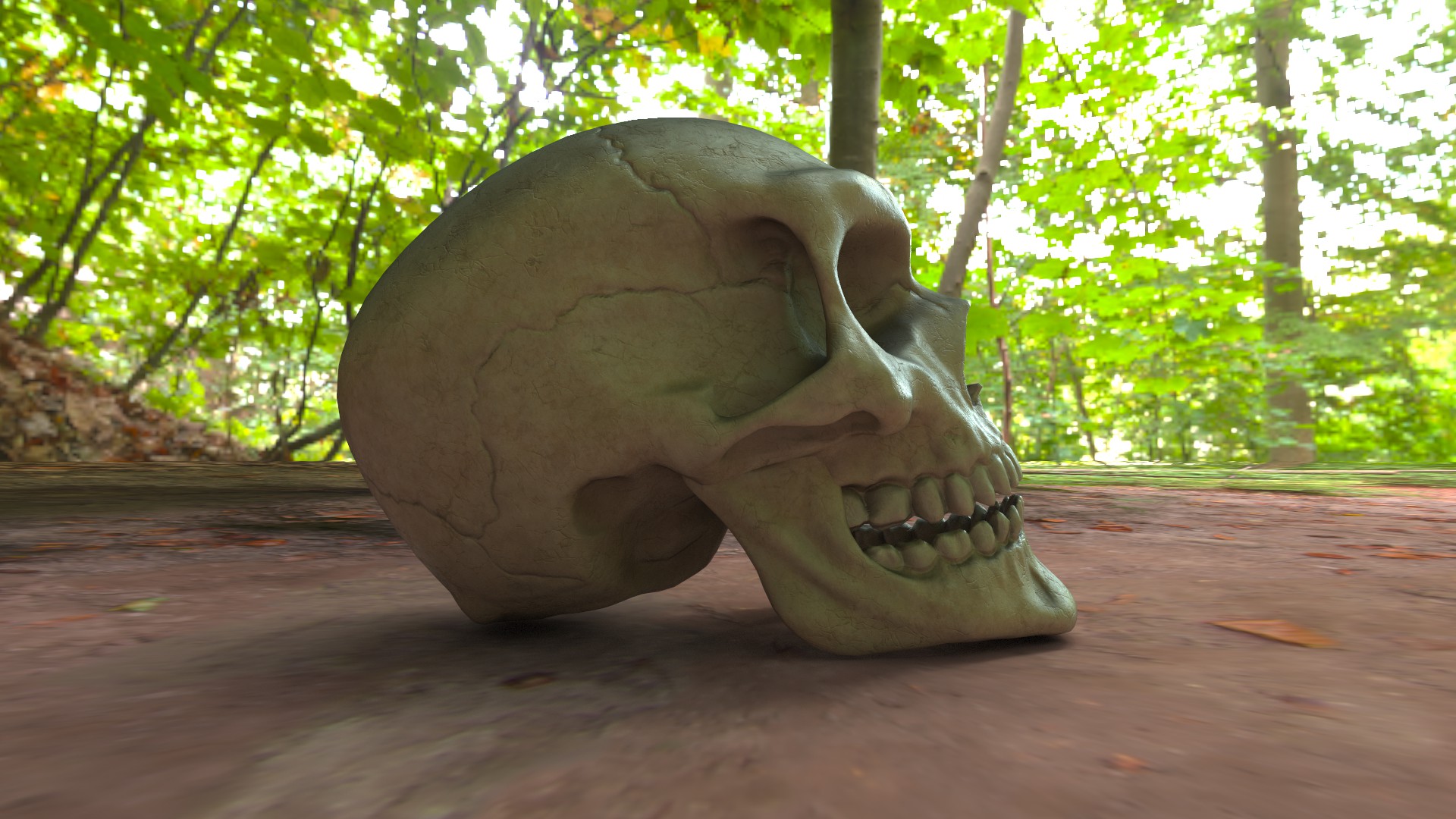
The Human Skull project began as a personal study in anatomical accuracy, material realism, and natural lighting. I’ve always been drawn to subjects that combine technical precision with artistic sensitivity, and the skull is one of those forms that demands both. It’s a structure that everyone recognizes instantly, yet it contains subtle details, asymmetries, and surface variations that make it a rewarding challenge for any 3D artist. When I set out to create this piece, my goal was to build a digital model that felt scientifically grounded while still carrying a sense of mood and atmosphere.
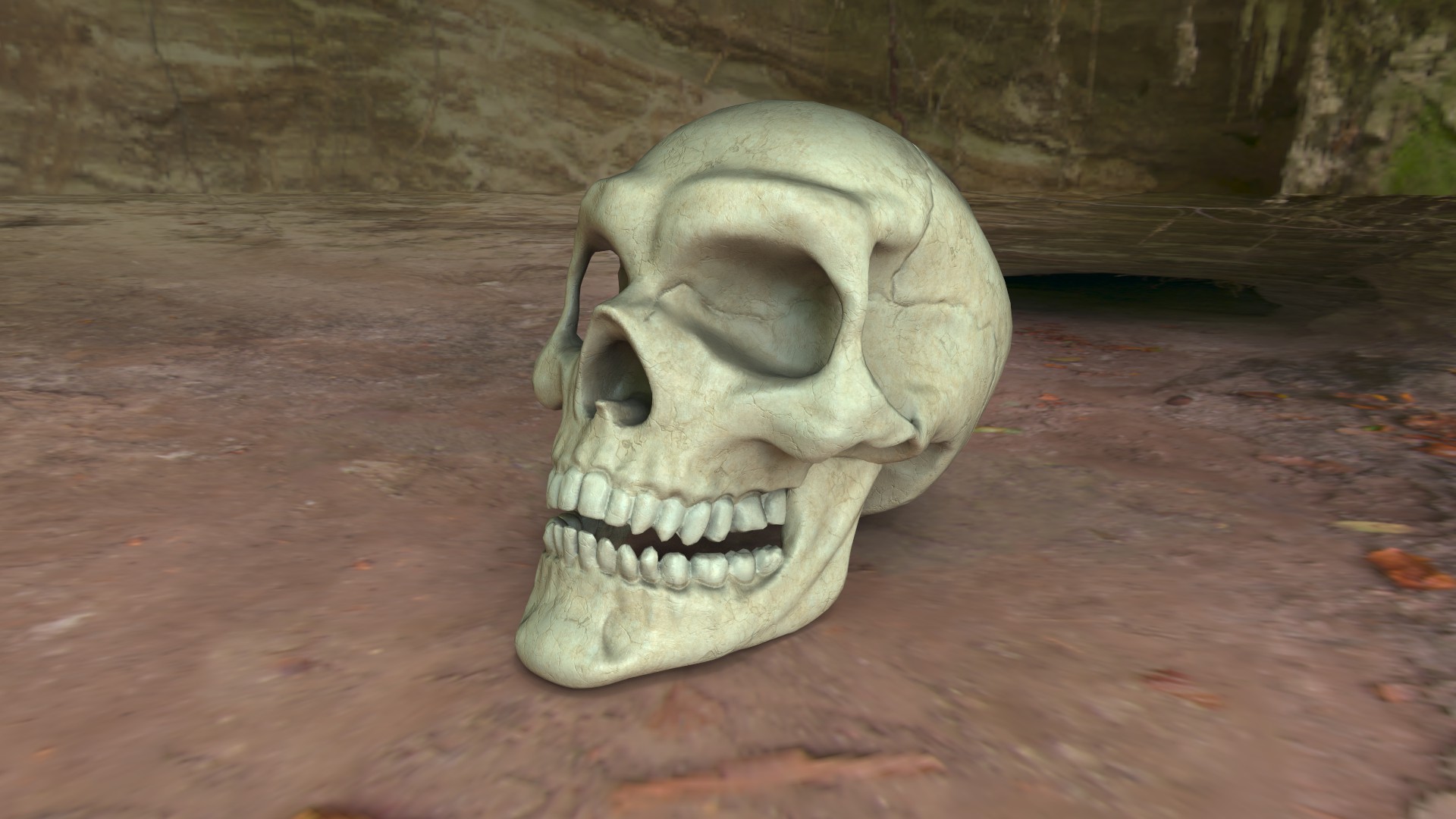
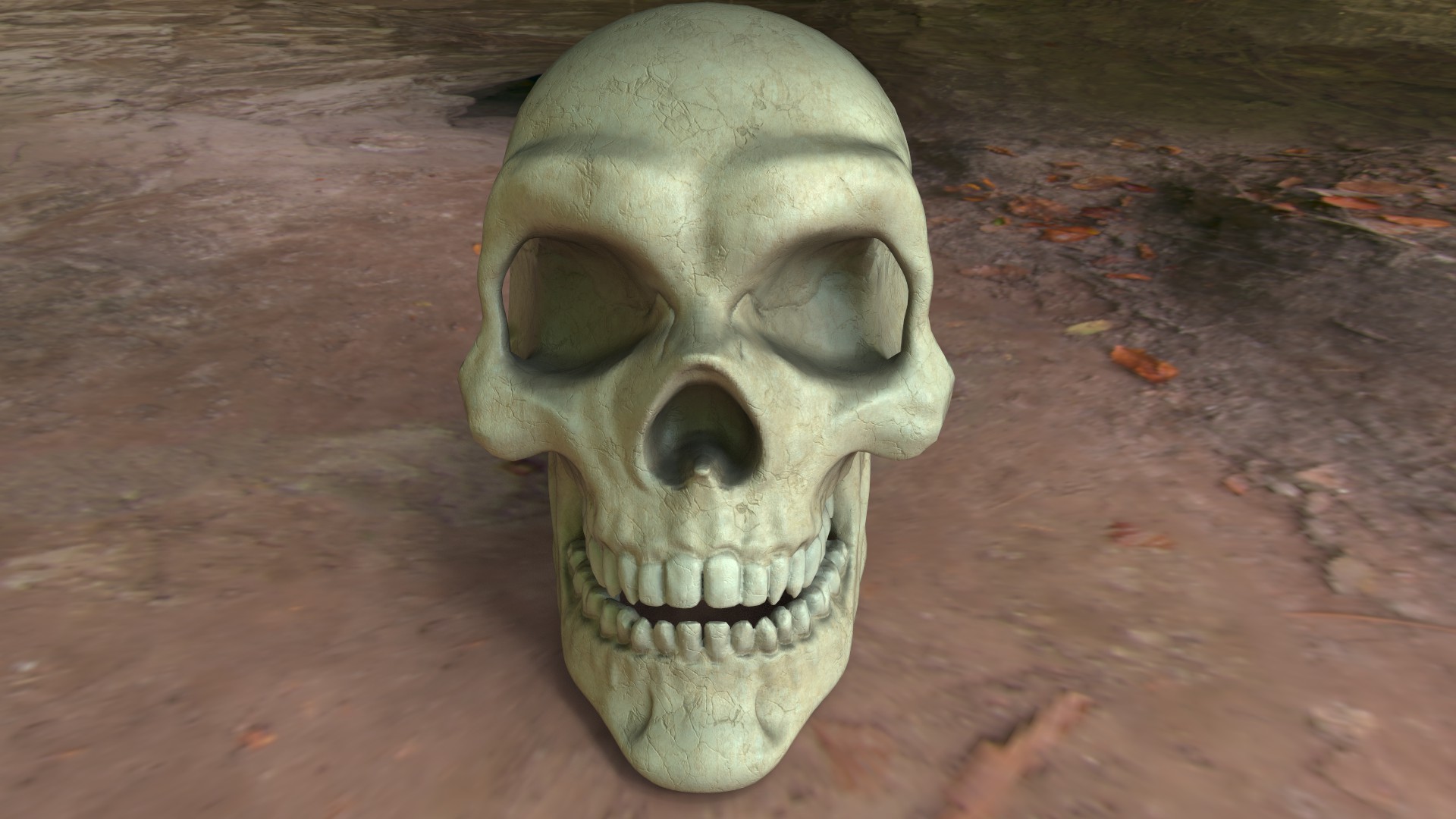
I started by gathering anatomical references, focusing on the proportions and curvature of the cranial structure. The skull isn’t just a smooth shell — it’s full of ridges, cavities, sutures, and tiny variations that define its character. I wanted to capture those details without exaggeration, so I spent time studying medical diagrams, photography, and physical models. The sculpting process was done with an emphasis on accuracy, making sure the zygomatic arch, orbital cavities, nasal structure, and jawline all felt correct. Even small deviations can make a skull look stylized or cartoonish, so I approached the sculpt with patience and precision.
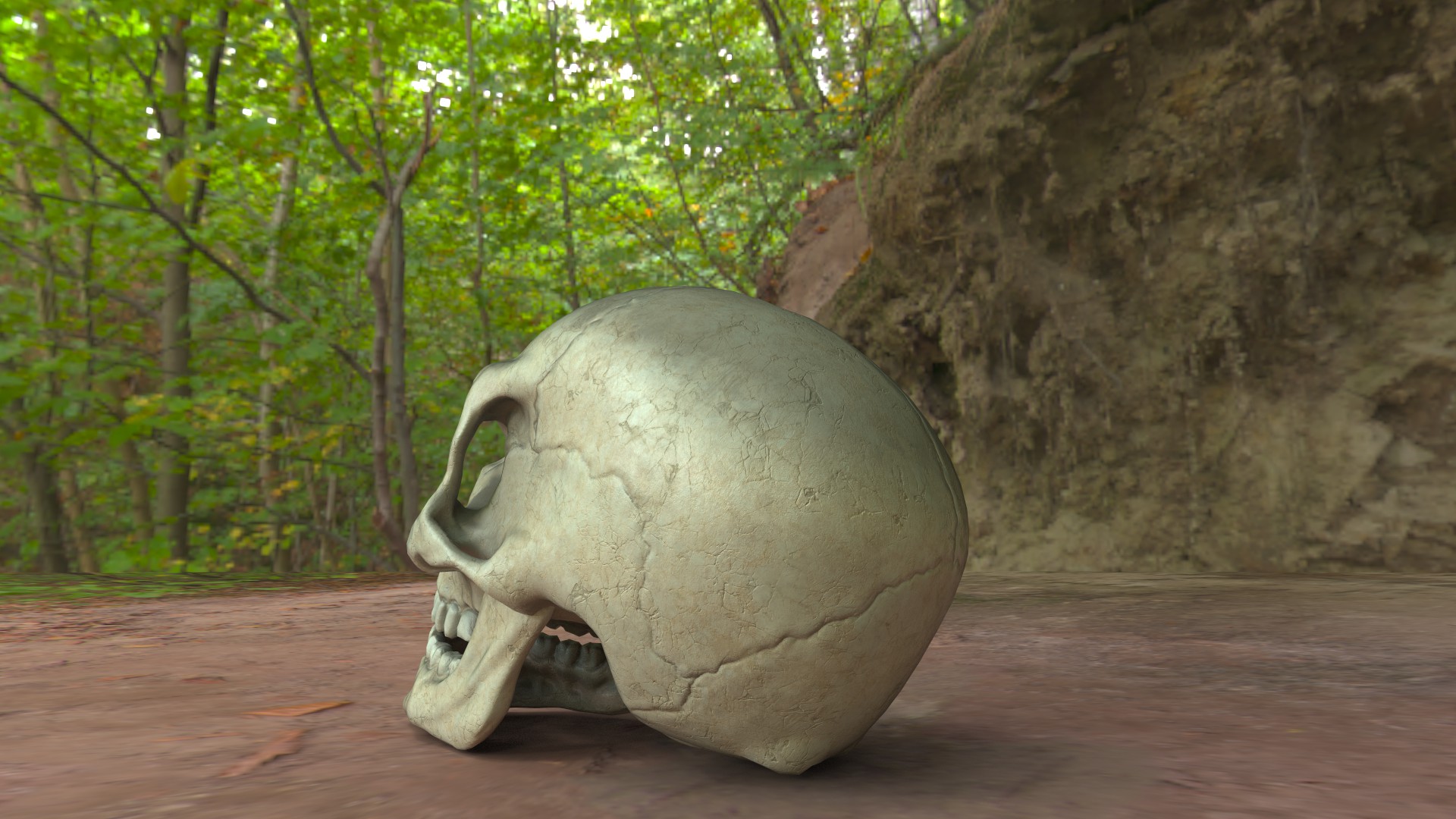
Once the sculpt was complete, I moved into texturing. Bone is deceptively complex as a material. It has a matte quality, but it also contains subtle translucency and micro‑roughness that affect how light interacts with it. I used PBR workflows to build a texture set that included diffuse coloration, roughness variation, and ambient occlusion to bring out the depth in the crevices. The goal was to avoid making the skull look too clean or too dirty — it needed to feel natural, like a real specimen photographed outdoors.
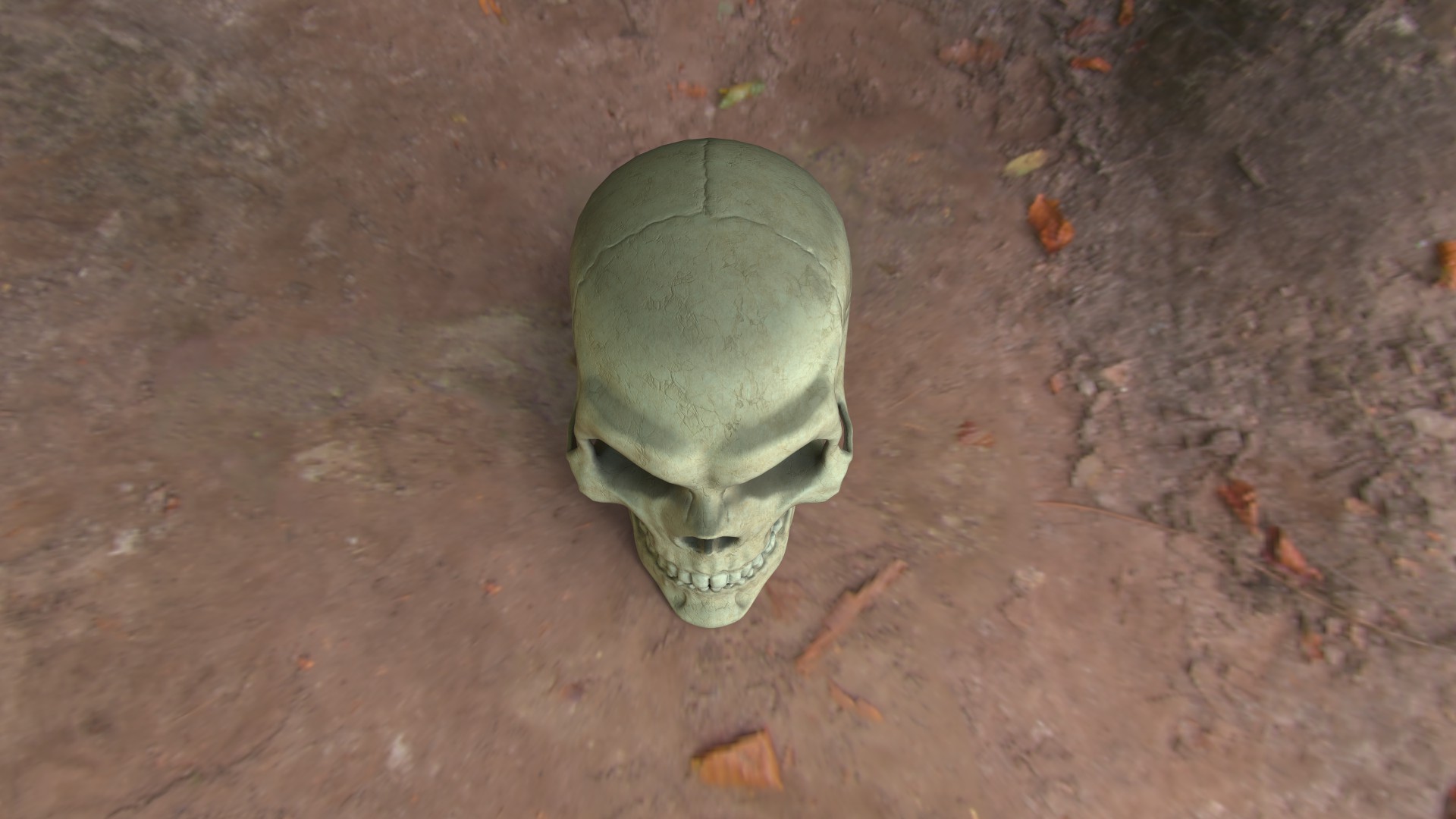
Lighting played a major role in the final presentation. I chose an outdoor environment because natural light reveals the material qualities of bone in a way studio lighting doesn’t. The soft shadows, warm highlights, and environmental reflections help ground the skull in a believable space. I experimented with different angles and compositions, capturing the skull from the side, front, rear, and top‑down perspectives. Each angle highlights different anatomical features, and together they create a complete visual study of the form.
The environment itself adds narrative context. Placing the skull on natural terrain gives the render a sense of discovery, as if the viewer stumbled upon it in the wild. The textures of the ground, the color temperature of the light, and the subtle imperfections in the scene all contribute to the realism. Even though the skull is the focal point, the environment helps tell a story and enhances the overall mood.
From a technical standpoint, the model is optimized for real‑time engines. The topology is clean, the UVs are efficient, and the textures are high‑resolution without being wasteful. This makes the skull suitable for use in games, cinematics, educational visualization, or even medical simulation. It’s a versatile asset that balances accuracy with performance.
Ultimately, this project represents my interest in combining scientific study with artistic expression. The skull is a timeless subject, and recreating it in 3D allowed me to explore anatomy, material creation, lighting, and composition all at once. It’s a piece that feels both educational and atmospheric, and it remains one of my favorite studies in realistic digital modeling.
View all projects ·
Browse assets ·
Contact